We woke early again this morning. Perhaps it was the farm rooster? In any case, after a relaxing breakfast we headed out on the road.
After doing a little research, we elected to drive highway 14 instead of 16. The GPS gave us 3 routes and all were the same in terms of time, so we picked highway 14 (The Poundmaker Trail). There was very little traffic the entire trip and the pavement was smooth most of the way.
Our only challenge was that we needed gas first thing. While our previous night’s host said there were lots of stations along the way, we didn’t find one for more than 40 kilometres. I’m not comfortable running too low on gas (sometime you can ask me why this is), so I keep a 5 gallon gerry can in the back of the truck. Thankfully we were able to fill before running too low and having to tap into the gerry can.
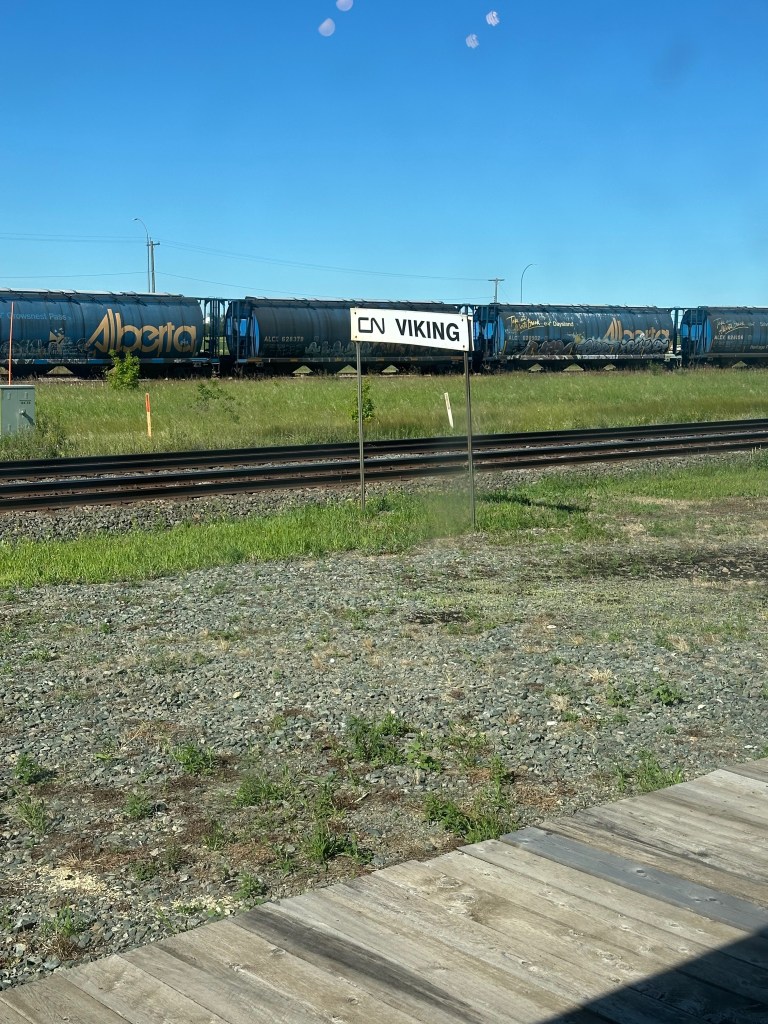
Mid morning we stopped off in Viking, the home of hockey’s famous Sutter family. The town is like most small towns in rural Canada, few shops other than a gas station, an auto parts store, a beer store, and a post office. We found no signs of the Sutters but decided to visit the local train station, which also served as an art gallery and cafe.
I ordered a coffee and a freshly baked cinnamon bun and Connie ordered a piece of lemon meringue pie. The art gallery and cafe are staffed by the local hospital auxiliary and accept cash only – good thing I brought some along with us. A sweet elderly lady, likely in her mid 80’s, was running the operation, and while we waited for the cinnamon buns to finish baking, she took us on a little tour of the station.
Viking Station is one of a very few mid-way train stations (Jasper, Winnipeg, Edmonton and Viking) where Via Rail will stop and pick you up and take you either east to Toronto or West to Vancouver. While there is no permanent stationmaster staffing the station, there is an office where someone will come to work and hand you a ticket should you decided to start your journey from Viking. The elderly lady did warn us though…the train is never on time.
The station was sold to the town by the railway several years ago on the condition they move it 75 feet back from the track.
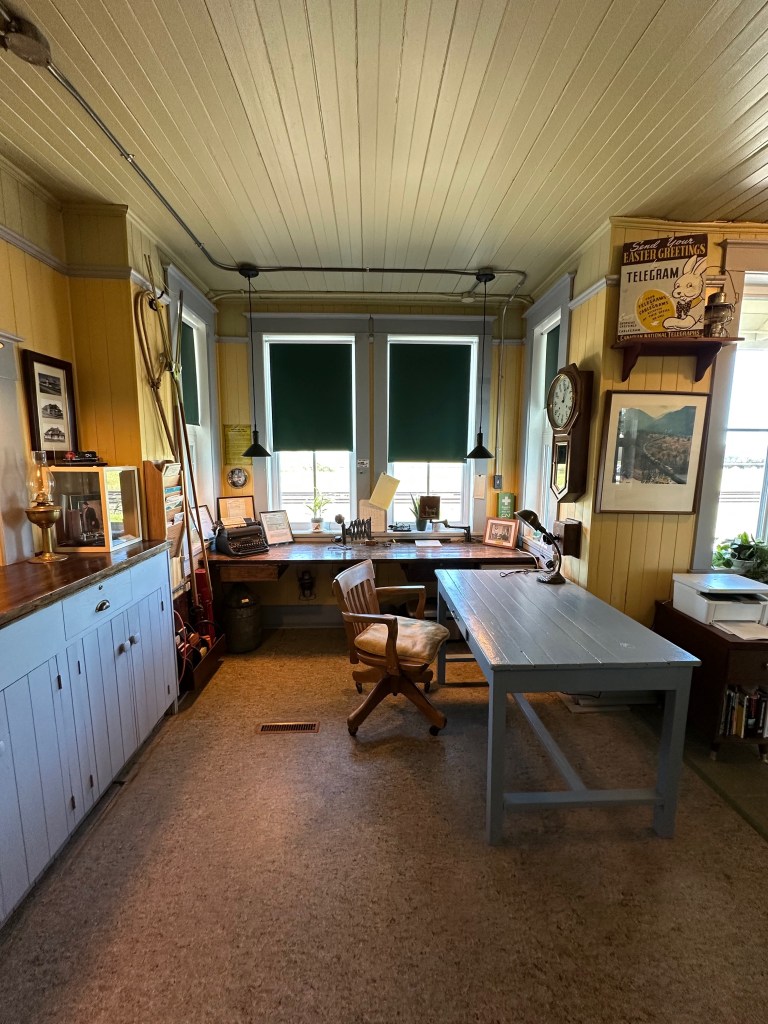
Hanging on the wall on the left, in the above photo, looks to be a couple of rakes. Those aren’t rakes but poles with two forks and a rope tied between. When there was a message to deliver, the stationmaster would attach the message to the rope and stand right beside the track as the train rolled by. The train engineer would slow the train down sufficiently, so a railroad employee on the train could grab the message as they rolled by.
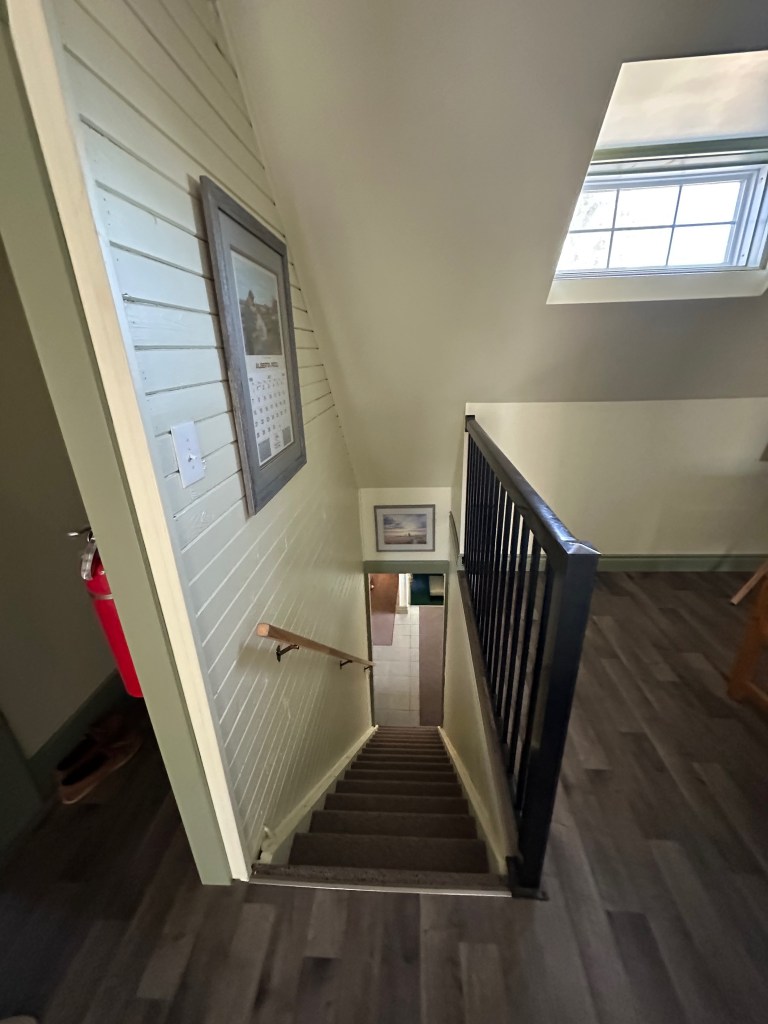
I climbed the stairs to what was the station masters living quarters. The stairs reminded me of our first home in Chilliwack. Narrow and very steep. The photo above really doesn’t show how steep the climb was.
Our Chilliwack home had an added hazard. The door at the bottom was more narrow than the staircase, so there was a 6 by 6 inch gap between the door casing and the first step at the bottom. When Sam was a toddler, he climbed the stairs on his hands and knees to find his older brother Ethan who was playing with his toys. At the time, Ethan was very protective of his things and pushed Sam down the steep stairs. Sam rolled all the way to the bottom lodging his head in that narrow gap at the bottom. Connie came running after hearing him fall and found Sam in a very awkward position. At first she thought he’d broken his neck but thankfully he was okay.
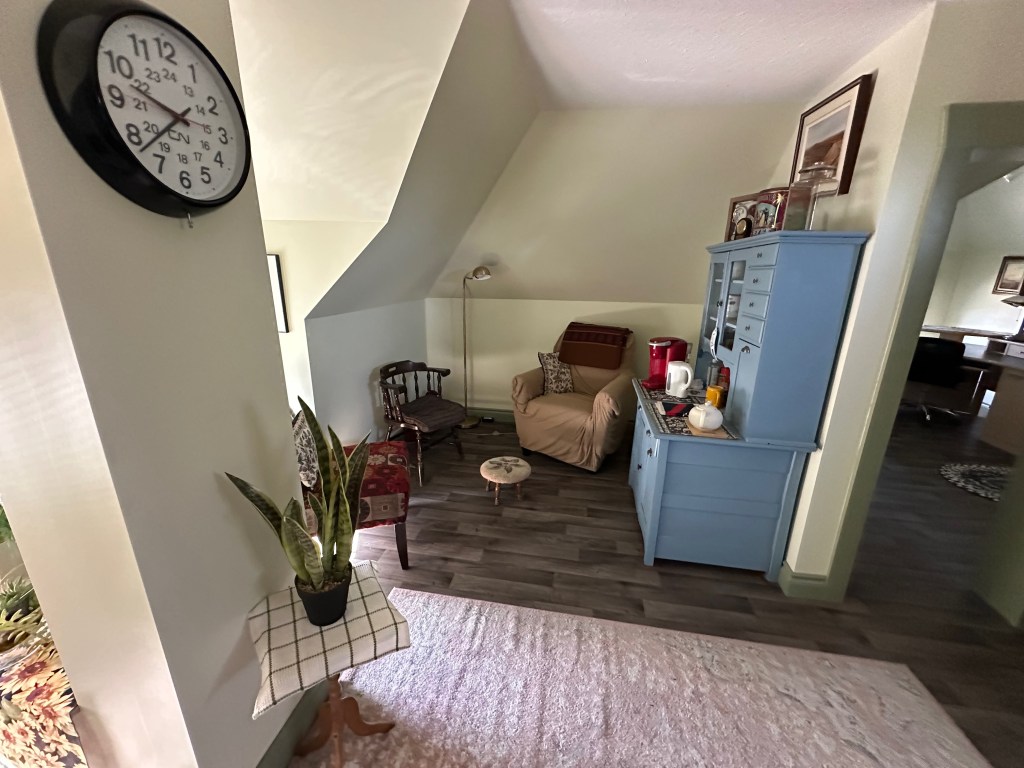
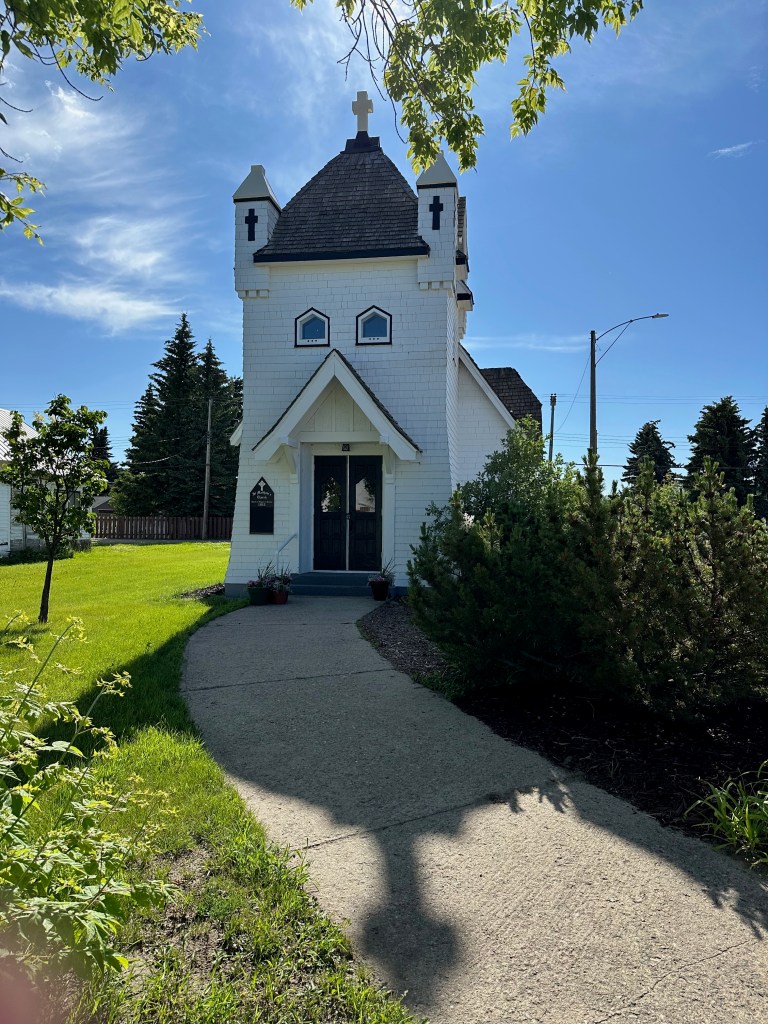
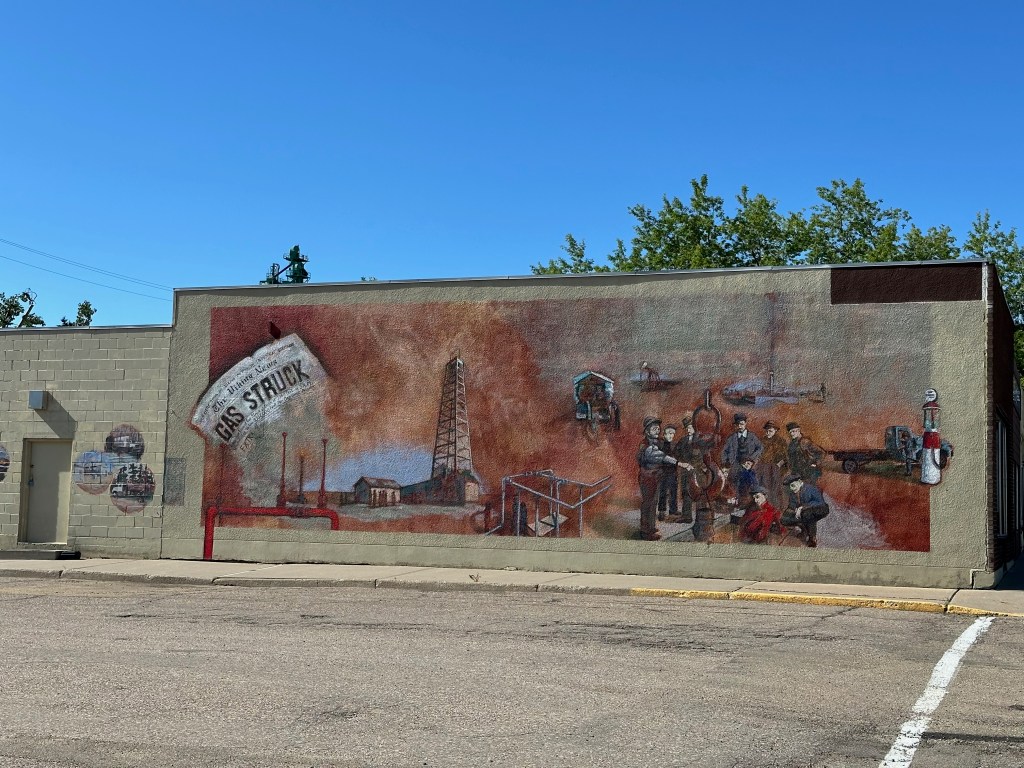
When she was younger, the elderly lady (I wish I’d asked her name) ran the bar at Kinsella, the town a few kilometres down the road. She told us she moved to Viking in 1990. There were four other elderly ladies sipping tea in the shop who she said were all born in the town. These folks, the town of Viking, and the bar in Kinsella (now closed) are becoming a scarcity. Understandable but kind of sad.
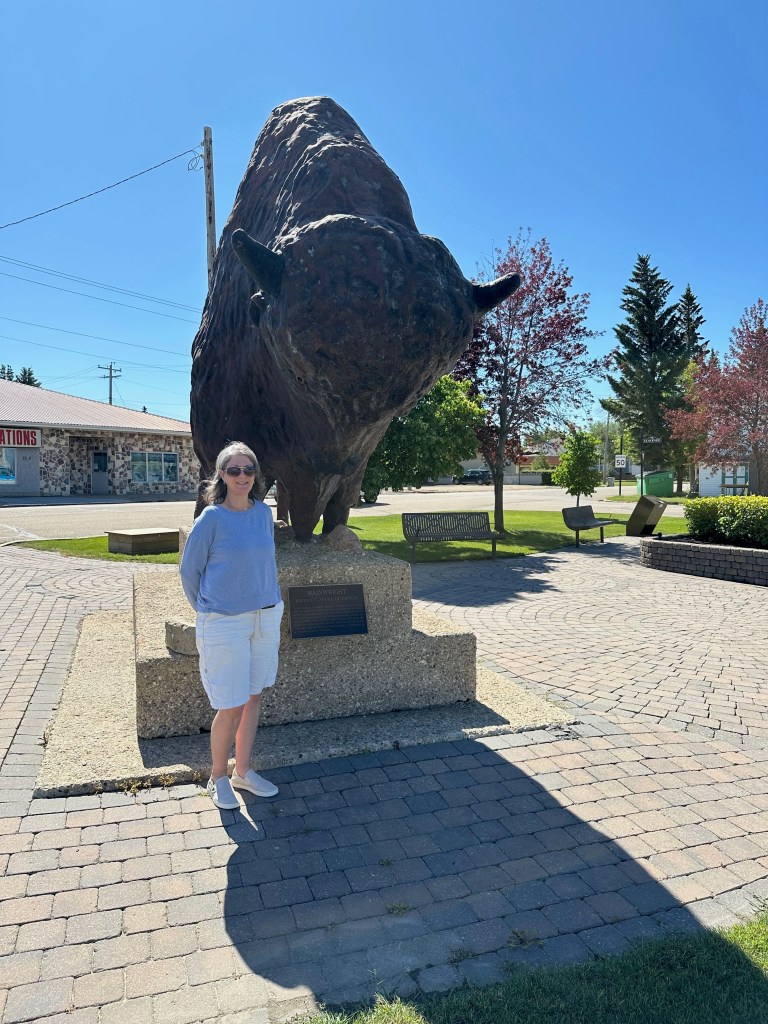
Our next stop was Wainwright, home to Canada’s largest buffalo statue and the buffalo capital of Canada.
We drove to see the memorial clock built in 1925 and located downtown. Unfortunately the clock and area were cordoned off for repairs. The clock survived a devastating fire that burned the town in 1929. It is being celebrated this year, its centennial, for standing the test of time (pardon the pun).
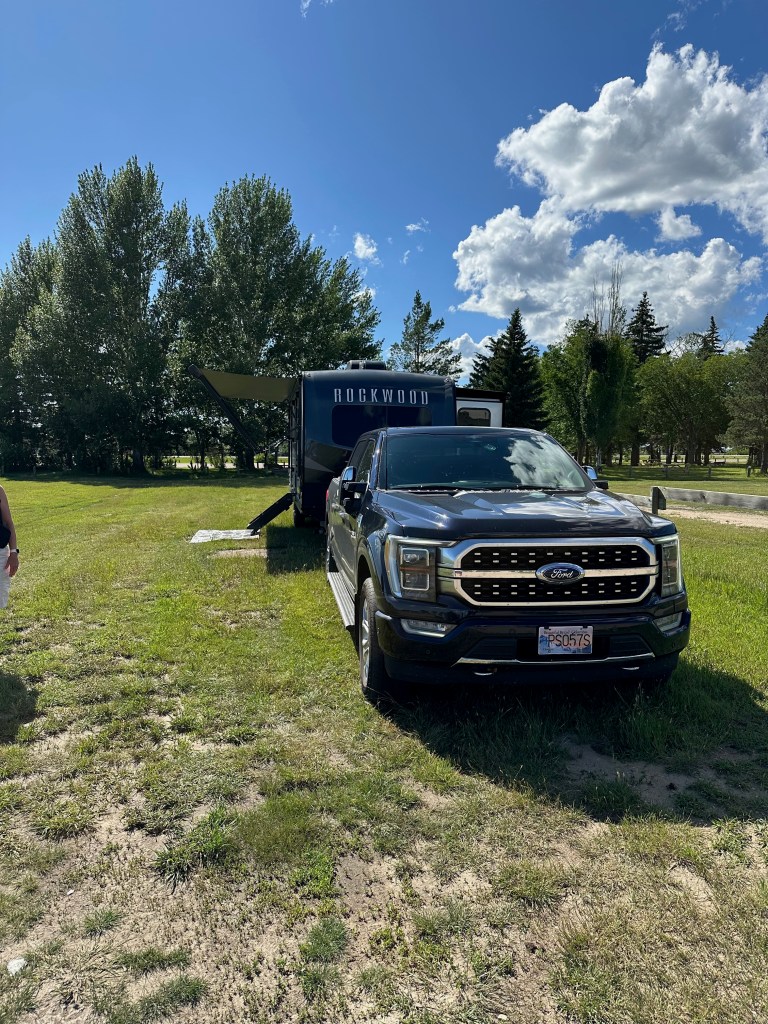
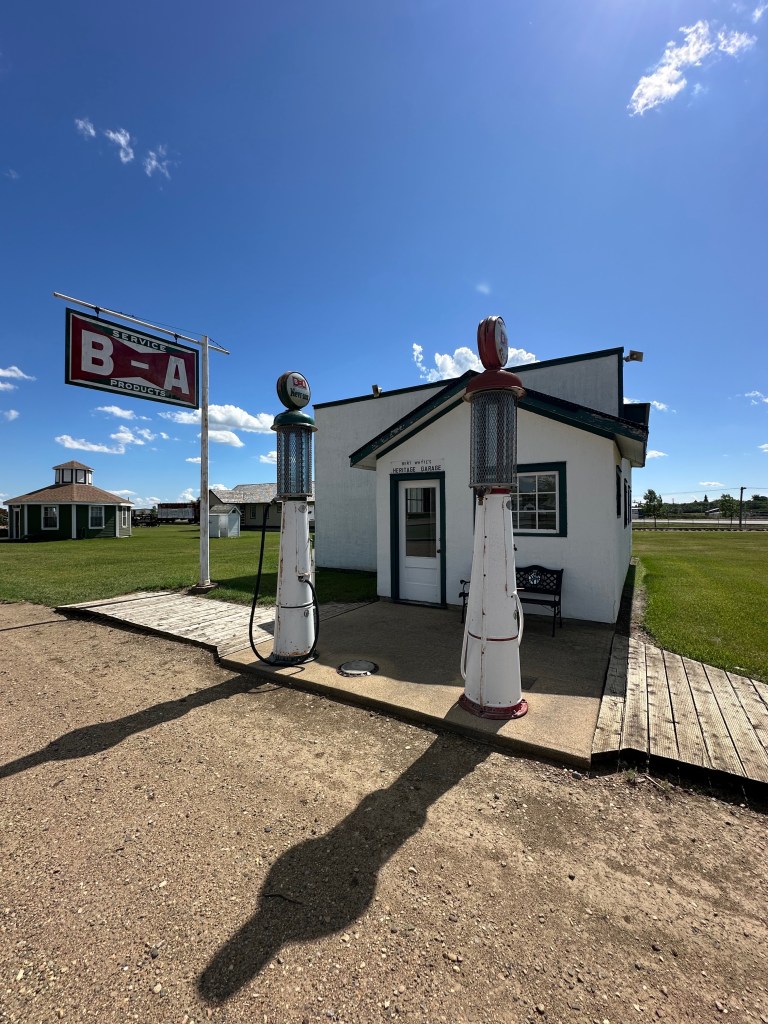
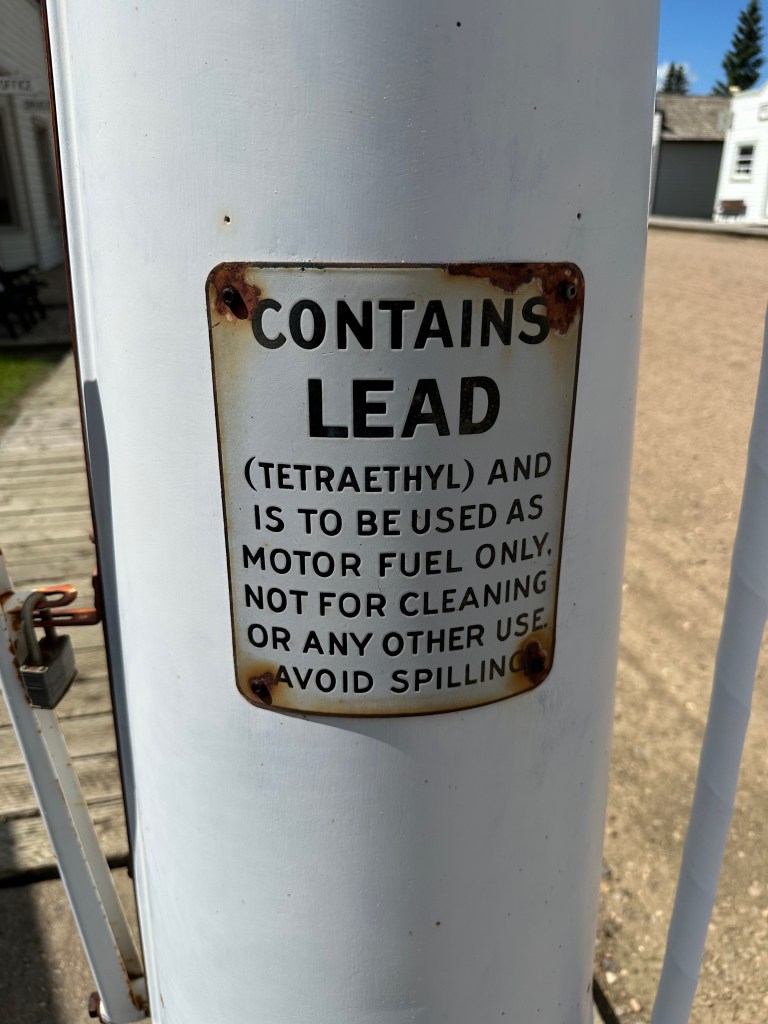
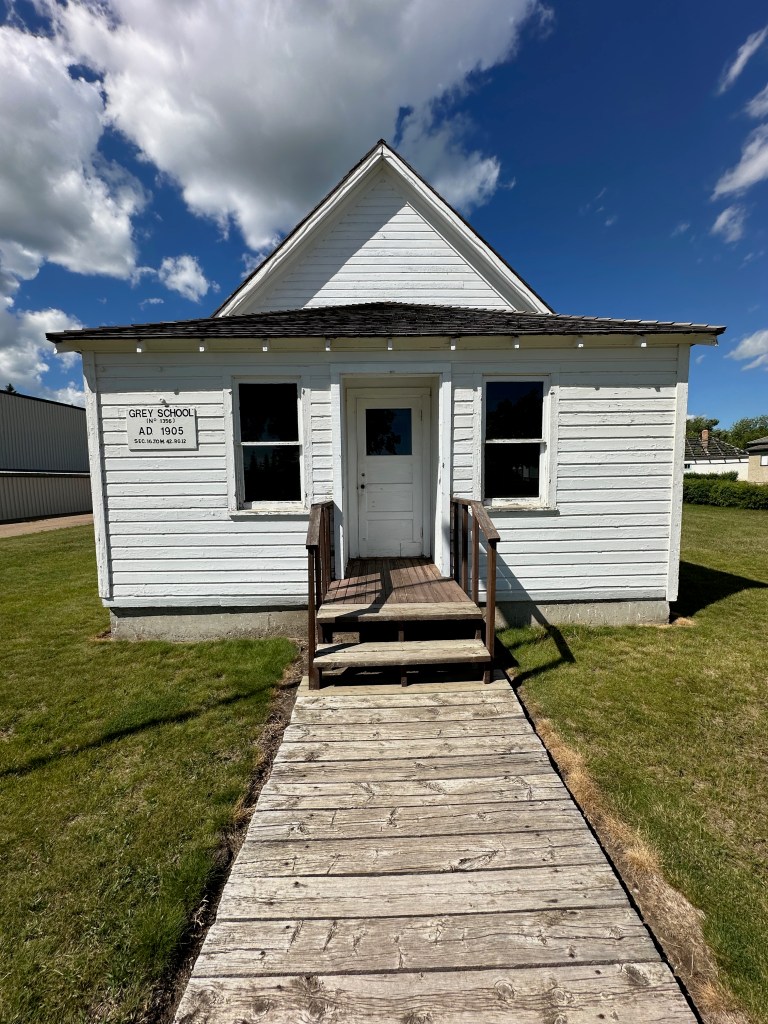
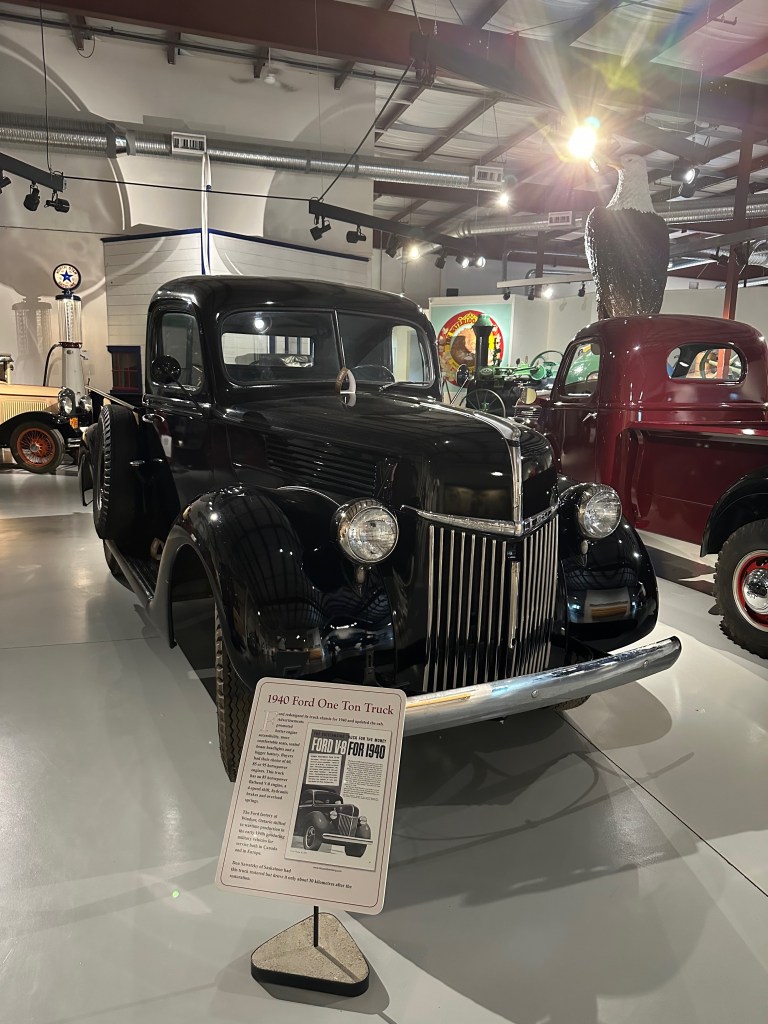
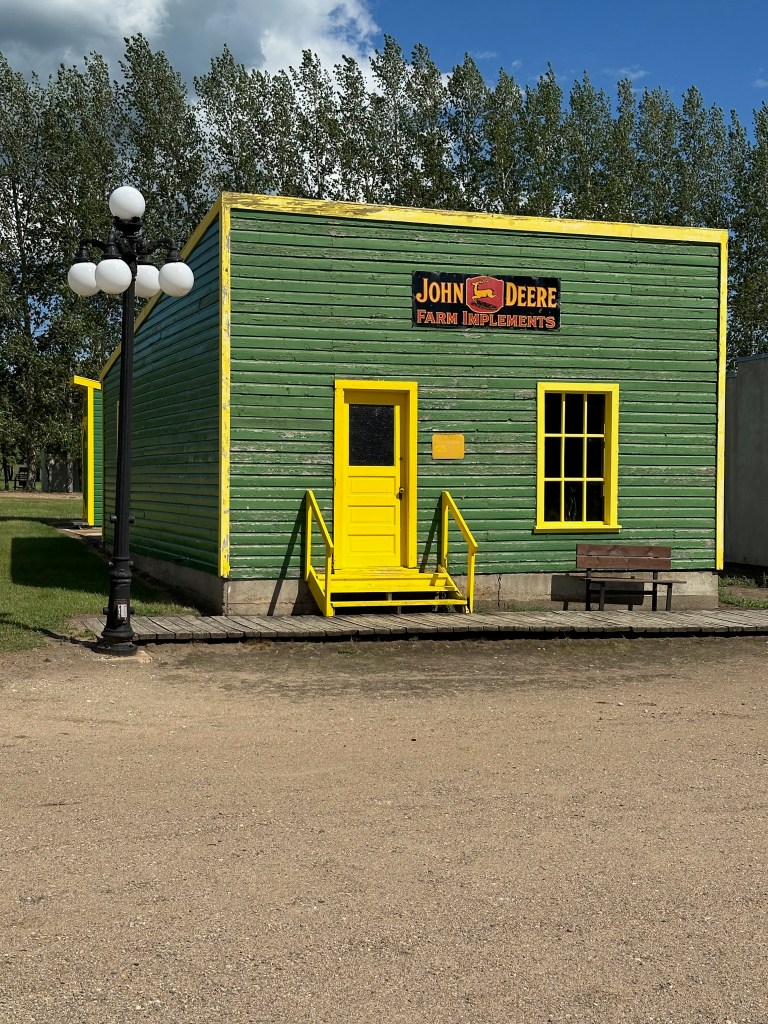
We arrived at our destination, North Battleford Saskatchewan around 1pm. After setting up and having a lite lunch, we toured the North Battleford Western Development Museum. It has exhibits inside and out and we highly recommend a visit should you ever pass this way.
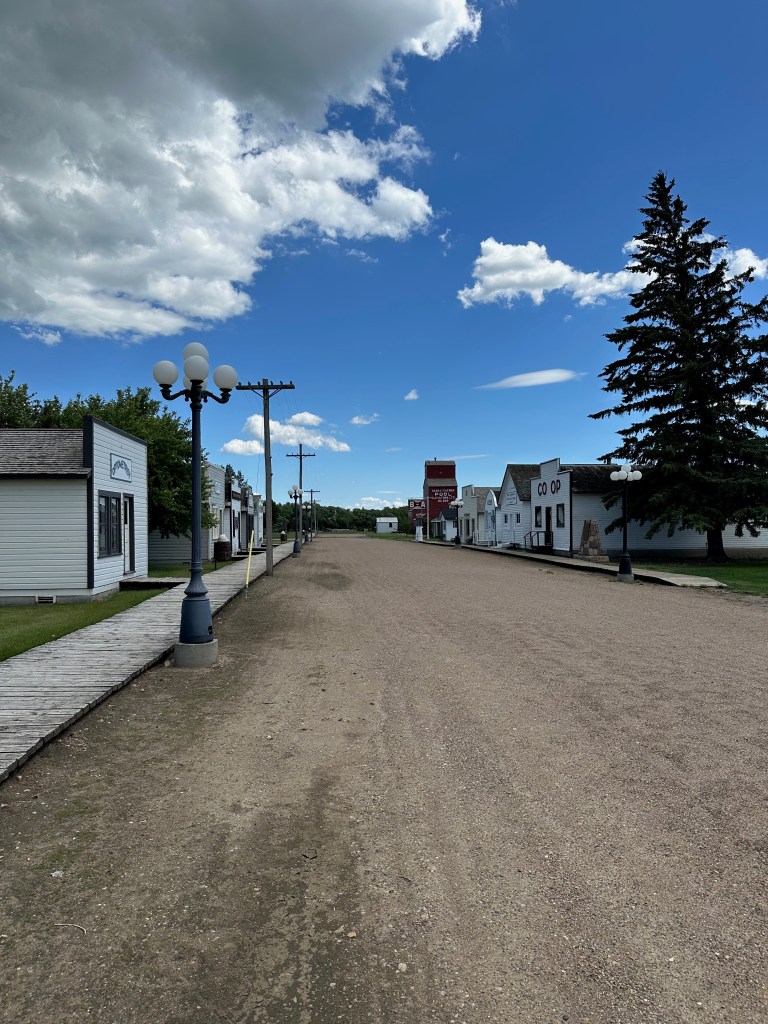
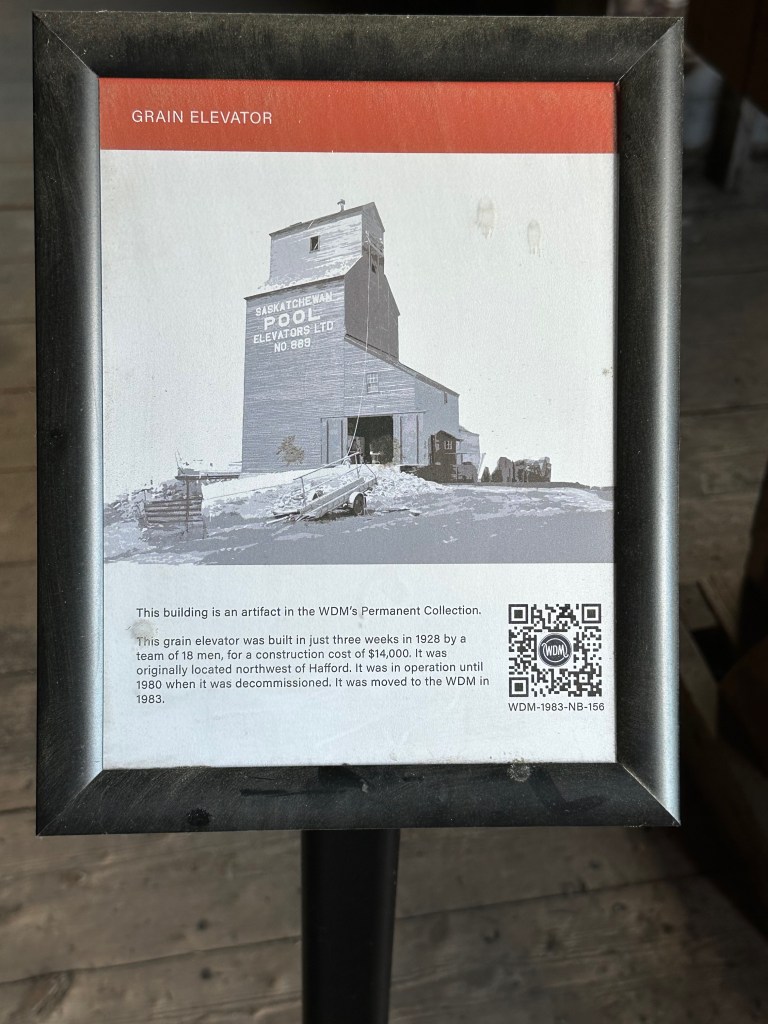
In 1928, the grain elevator above was built in 3 weeks with 18 men and it operated for 62 years. I can’t imagine a feat like that being repeated today. It would be over-engineered, over-regulated and likely be more than a year before it was used.
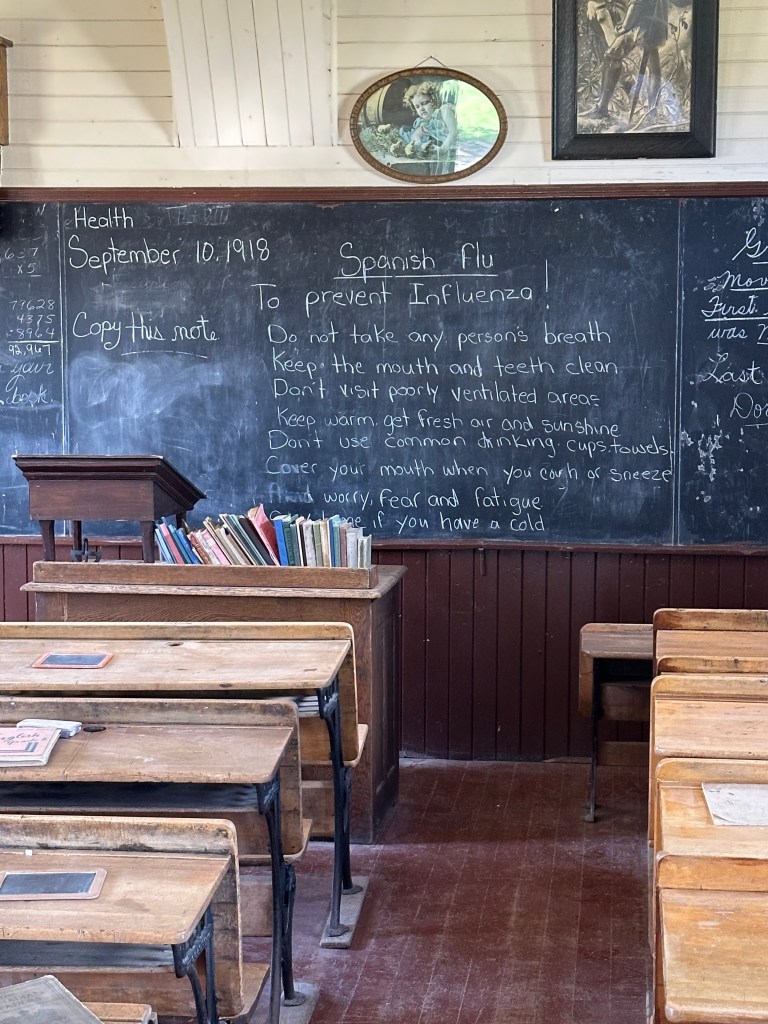
I thought the note on the blackboard of the little school house below was interesting. In 2020, I asked my mom if her parents, who lived on the prairies at the time, ever spoke about the Spanish flu. She didn’t recall them ever mentioning it.
Until next time, happy reading.
 Mal and Connie's Cross Canada Adventure 2.0